How to Store Renewable Energy Equipment Safely During Project Delays
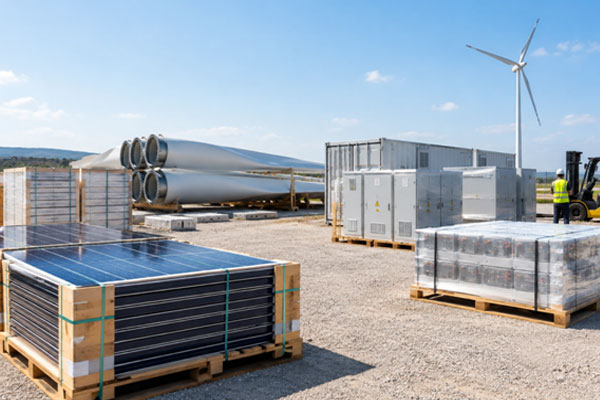
Renewable energy projects often involve long procurement timelines, complex approvals, grid connection requirements, and changing construction schedules. As a result, solar panels, wind turbine components, inverters, transformers, battery systems, and other equipment may arrive well before the project is ready for installation. Leaving these components in unsuitable conditions can lead to damage, reduced performance, warranty concerns, and additional replacement costs.
For businesses managing long term storage renewable energy components Australia, the priority is not simply finding warehouse space. It is ensuring that every item remains protected, traceable, and ready for installation when the project moves forward.
Why Renewable Energy Equipment May Need Long-Term Storage
Project delays can happen for several reasons, including:
- Planning and environmental approval delays
- Grid connection or transmission infrastructure issues
- Changes to project design or installation schedules
- Shipping arriving earlier than expected
- Delays in civil works or site preparation
- Contractor, financing, or procurement changes
- Weather-related interruptions
- Equipment purchased in advance to avoid future supply chain problems
Early delivery can help reduce supply risks, but equipment that remains stored for months must be managed carefully. Lessons from Australian battery projects have also highlighted that early equipment delivery can create performance risks if storage conditions are not suitable.
What Can Go Wrong During Extended Equipment Storage?
Renewable energy components are designed for specific operating and handling conditions. Storage outside those conditions may affect their physical condition or future performance.
Moisture and Condensation
Humidity, rainwater, and condensation can affect electrical connections, metal surfaces, insulation, and sensitive electronic parts. Even when equipment is not directly exposed to rain, changes in temperature inside poorly ventilated storage areas can create moisture problems.
Dust and Contamination
Dust can enter vents, connectors, cooling systems, and exposed surfaces. For equipment intended for clean electrical environments, contamination may increase the amount of preparation required before commissioning.
Corrosion
Metal frames, fasteners, connectors, and other exposed parts may corrode when stored in damp or poorly controlled environments. Coastal areas and locations with high humidity require particular attention to corrosion protection.
Packaging Deterioration
Original packaging may weaken over time due to moisture, sunlight, poor stacking, or repeated movement. Damaged packaging can leave components more exposed during later handling and transportation.
Physical Damage
Improper stacking, unsuitable lifting methods, vibration, and repeated movement can damage large or fragile equipment. Heavy components should be stored according to their weight, dimensions, centre of gravity, and manufacturer handling instructions.
Storage Requirements for Different Renewable Energy Components
Not every component should be stored in the same way. The storage plan should consider the equipment’s material, sensitivity, size, and expected storage duration.
Solar Panels and Photovoltaic Modules
Solar panels should remain in their original packaging wherever possible and be stored on stable, level surfaces. Boxes should not be exposed to standing water, and stacking must follow the manufacturer’s instructions.
Important considerations include:
- Protecting packaging from rain and ground moisture
- Avoiding excessive stacking height
- Preventing impact during movement
- Keeping modules away from unstable surfaces
- Checking packaging for tears, compression, or water damage
- Maintaining clear identification for each batch
If panels are stored for an extended period, regular visual inspections can help identify packaging deterioration before it affects the modules.
Wind Turbine Components
Wind energy projects may involve large and irregularly shaped components such as blades, hubs, nacelles, towers, and electrical systems. These items require careful planning because their size makes repeated movement expensive and increases the risk of handling damage.
Storage planning should account for:
- Adequate ground bearing capacity
- Component dimensions and access routes
- Special lifting and support equipment
- Protection from excessive exposure to weather
- Safe positioning to prevent movement or deformation
- Inspection access around stored components
Large wind turbine parts should not simply be placed in an open yard without considering drainage, support points, weather exposure, and future lifting requirements.
Inverters, Transformers, and Electrical Equipment
Electrical equipment often requires greater protection from moisture, dust, and temperature changes. Storage conditions should follow the manufacturer’s recommendations, particularly where equipment contains sensitive electronics, insulation systems, cooling components, or exposed terminals.
Businesses should confirm:
- Whether indoor storage is required
- Whether humidity control is necessary
- Whether protective covers allow adequate ventilation
- Whether periodic inspection or preservation is recommended
- Whether terminals and connectors need additional protection
- Whether equipment must remain sealed until installation
Battery Energy Storage Components
Battery-related equipment requires special attention because storage conditions, safety requirements, and handling procedures can vary significantly by battery chemistry and system design. Storage arrangements should follow the supplier’s technical documentation, safety requirements, and applicable site procedures.
Battery systems should not be treated like ordinary general cargo. Businesses must consider temperature limits, fire safety, access control, inspection requirements, and any restrictions on storage duration or state of charge specified by the manufacturer.
How to Plan Long-Term Storage for Renewable Energy Projects
A reliable storage plan should be prepared before equipment arrives, not after it has already been unloaded.
1. Identify the Equipment and Its Storage Conditions
Create a detailed inventory of all incoming components. Record the equipment type, dimensions, weight, quantity, packaging condition, manufacturer requirements, and expected storage duration.
This helps determine which items need:
- Covered storage
- Indoor warehouse space
- Weather-resistant protection
- Special supports
- Controlled environmental conditions
- Restricted access
- Periodic technical inspections
2. Select a Suitable Storage Location
The storage location should match the equipment’s requirements rather than being selected only on available space or price.
Evaluate:
- Protection from rain and direct sunlight
- Drainage and flood exposure
- Ground stability
- Ventilation
- Dust levels
- Security
- Fire protection
- Vehicle and crane access
- Space for inspection and future dispatch
For large renewable energy components, the site must also support safe loading, unloading, and repositioning without unnecessary handling.
3. Keep Equipment Off the Ground Where Required
Ground contact can expose packaging and components to water, mud, insects, and contamination. Suitable pallets, frames, skids, or manufacturer-approved supports can reduce these risks.
However, supports should be selected carefully. Incorrect support points may place stress on panels, frames, blades, or other sensitive components.
4. Maintain Clear Inventory Records
Long-term storage becomes difficult when equipment cannot be located quickly. Each item should have a clear identification system linked to inventory records.
Useful records may include:
- Equipment description
- Serial or batch number
- Arrival date
- Storage location
- Packaging condition
- Inspection dates
- Movement history
- Damage reports
- Planned dispatch date
Good records reduce delays when installation resumes and help businesses identify missing, damaged, or incorrectly stored components.
Inspection and Maintenance During Storage
Long-term storage should include scheduled inspections rather than leaving equipment untouched until the project restarts.
Inspection frequency depends on the equipment type, storage environment, packaging, and manufacturer guidance. Checks may include:
- Signs of water ingress
- Torn or weakened packaging
- Corrosion
- Dust accumulation
- Pest activity
- Damaged protective covers
- Shifting or unstable stacking
- Changes in storage conditions
- Identification labels and inventory accuracy
For sensitive electrical or battery equipment, inspections should be completed by suitably qualified personnel where technical checks are required.
A storage inspection report with photographs can also help establish the condition of equipment at arrival, during storage, and before dispatch.
Protecting Equipment in Australia’s Storage Environment
Australia presents different storage challenges depending on the project location. Equipment stored in coastal regions may face salt exposure and humidity, while inland areas may experience dust, heat, and large temperature changes. Remote project locations may also have limited access to specialised handling facilities.
For this reason, businesses should consider local environmental conditions when planning long term storage renewable energy components Australia. A storage solution suitable for a dry inland warehouse may not provide the same protection in a coastal or high-humidity environment.
The storage plan should account for:
- Regional weather conditions
- Seasonal temperature changes
- Rainfall and humidity
- Dust and airborne contamination
- Exposure to salt air
- Transport distance to the project site
- Availability of suitable lifting and handling equipment
How to Reduce Costs During Project Delays
Storage costs are not limited to warehouse rent. Poor planning can create additional expenses through rehandling, damaged packaging, replacement parts, inspections, emergency transport, and installation delays.
Businesses can reduce avoidable costs by:
- Planning storage before equipment delivery
- Grouping equipment according to project phases
- Avoiding unnecessary movement
- Using suitable storage supports
- Maintaining accurate inventory records
- Inspecting equipment at planned intervals
- Coordinating storage with future transport requirements
- Confirming preservation requirements with manufacturers
- Reviewing insurance and liability responsibilities
A well-planned storage arrangement can also make project restart easier because equipment is already organised, documented, and prepared for dispatch.
When Should Businesses Use Professional Storage and Handling Support?
Professional support may be useful when equipment is oversized, high-value, technically sensitive, or expected to remain stored for an extended period. This is especially relevant when a business does not have suitable warehouse space, lifting equipment, preservation facilities, or trained personnel.
A specialist provider should be able to discuss:
- Storage duration and environmental requirements
- Indoor or outdoor storage suitability
- Heavy and oversized equipment handling
- Inventory management
- Inspection and condition reporting
- Packaging and preservation
- Loading and unloading arrangements
- Future delivery coordination
The right solution should be based on the equipment’s technical requirements and project timeline, not simply the availability of open storage space.
Preparing Renewable Energy Equipment for Installation
When a delayed project finally resumes, equipment should not be dispatched without a final condition review. Before transport to the installation site, businesses should confirm that:
- Packaging remains secure
- Components are free from visible damage
- Required protective materials are intact
- Inventory matches project requirements
- Equipment can be safely lifted and transported
- Any manufacturer inspection requirements have been completed
- Documentation is available for the installation team
This final review helps prevent storage-related issues from becoming installation-day problems.
Conclusion
Project delays are a common challenge in large renewable energy developments, but equipment damage during the waiting period does not need to be unavoidable. Proper storage planning, suitable environmental protection, accurate inventory records, regular inspections, and careful handling can help preserve equipment until construction is ready to continue.
For businesses managing renewable energy projects in Australia, KGE Global provides storage and handling support designed around equipment type, project requirements, and extended storage timelines. Early planning can help protect valuable components, control avoidable costs, and support a smoother transition from storage to installation.