Renewable Energy Transportation in Australia: How to Move Wind, Solar and Energy Equipment Safely
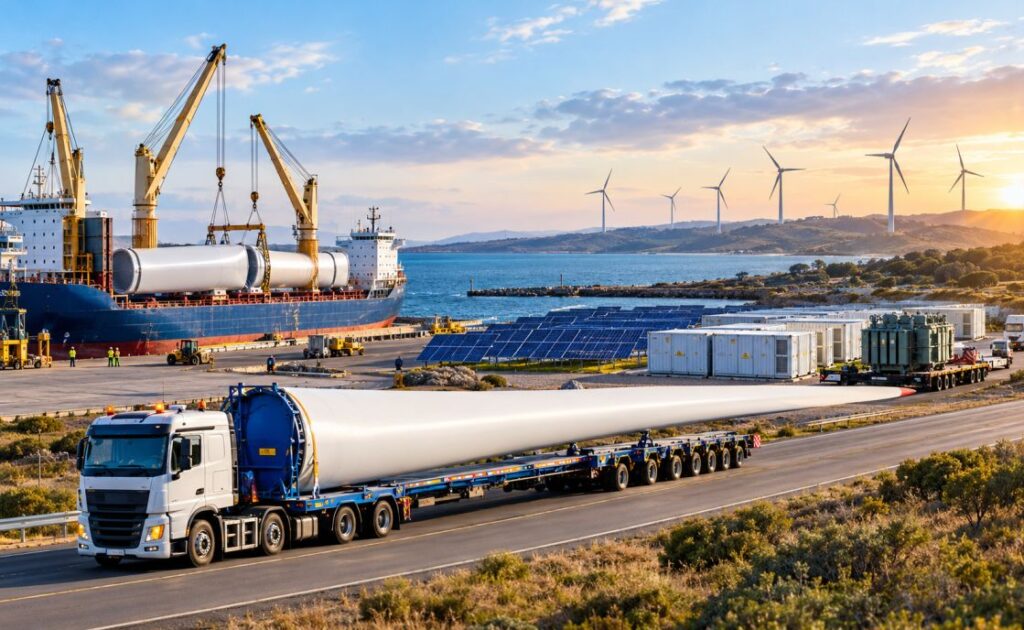
Australia is investing heavily in renewable energy projects, including wind farms, solar farms and battery energy storage systems. These projects often require large and sensitive equipment to travel from ports and manufacturing facilities to remote project sites.
Moving this equipment is not the same as transporting standard freight. Wind turbine blades, tower sections, transformers, solar equipment and battery systems can be oversized, heavy or difficult to handle. They may also need specialised trailers, lifting equipment, route planning and permits.
A well-planned renewable energy transportation Australia strategy helps project teams move critical equipment safely while reducing avoidable delays, handling problems and transport risks.
What Does Renewable Energy Transportation Involve?
Renewable energy transportation covers the movement of equipment used to build and operate renewable energy facilities. The cargo can include:
- Wind turbine blades, hubs and nacelles
- Wind turbine tower sections
- Solar panels and mounting systems
- Transformers and electrical equipment
- Battery energy storage systems
- Generators and power equipment
- Construction machinery
- Cables and other project components
The transportation process can involve several stages. Equipment may first arrive at an Australian port, move to temporary storage, travel by road or rail, and finally reach a wind farm, solar farm or battery project.
Because renewable energy projects are often located outside major cities, the final stage can be one of the most challenging parts of the journey.
Why Is Renewable Energy Equipment Difficult to Transport?
The size and weight of renewable energy equipment create special transportation requirements.
A wind turbine blade, for example, can be extremely long and difficult to manoeuvre through bends, intersections and narrow roads. Tower sections may have large diameters and require suitable trailers. Heavy transformers can create significant axle-load and bridge restrictions.
Australian freight planning has identified wind turbine blades, solar panels and transformers among the equipment that needs to be transported to renewable energy zones. Large oversize and overmass movements can therefore require careful coordination between transport operators, road authorities and project teams.
The challenge is not only moving the cargo from one location to another. The complete route must be checked to determine whether the equipment can safely pass through every important section.
Transporting Wind Turbine Components
Wind turbine components are among the most demanding renewable energy cargo.
Wind Turbine Blades
Blades are extremely long and can require specialised trailers. Their length can make tight turns, roundabouts, bridges and intersections difficult to navigate.
Before transportation begins, the route should be assessed for:
- Road width
- Turning areas
- Bridge restrictions
- Overhead power lines
- Traffic conditions
- Sharp bends
- Steep sections
- Roadside obstacles
In some locations, temporary traffic management or other arrangements may be required to allow the blade to pass safely.
Tower Sections
Wind turbine towers are transported in separate sections because of their size. Their weight, diameter and length must be considered when selecting the trailer and planning the route.
Loading and unloading also require suitable lifting equipment and enough space at the project site.
Nacelles and Hubs
Nacelles and hubs can be heavy and require specialised lifting and transport arrangements. Their weight can affect road access, trailer selection and bridge assessments.
For these components, transport planning should begin well before the equipment reaches the port or project site.
Transporting Solar Energy Equipment
Solar projects can involve large quantities of equipment rather than a small number of extremely large components.
Solar panels, mounting structures, electrical equipment, transformers, cables and construction machinery may all need to reach the project location.
The main challenge is often coordinating multiple shipments so that equipment arrives when it is required. Delays in one part of the supply chain can affect installation schedules and site productivity.
Packaging and handling are also important. Solar panels and other sensitive equipment need protection against damage during loading, unloading and transportation.
Moving Battery Energy Storage Equipment
Battery energy storage systems are becoming an important part of Australia’s renewable energy infrastructure. Large battery projects can involve specialised battery units, transformers, electrical systems and supporting equipment.
These shipments require careful planning because the cargo may have specific handling, packaging, storage and transportation requirements.
Project teams should confirm applicable transport requirements before the equipment is moved. The transportation plan should also consider loading conditions, temporary storage, site access and unloading arrangements.
Port-to-Site Transportation Is a Critical Stage
Many renewable energy components enter Australia through major ports before continuing to the project site.
The journey from the port to the final destination can involve several transport modes and different road conditions. A route that appears suitable on a standard map may not be practical for an oversized load.
Port operations also need to be coordinated with inland transportation. Equipment may require temporary storage if the project site is not ready to receive it immediately.
Good coordination between the port, freight operator, storage facility and project team can help reduce waiting time and unnecessary handling.
Route Planning for Oversized Renewable Energy Cargo
Route planning is one of the most important parts of renewable energy logistics.
A suitable route should be assessed based on the actual dimensions and weight of the cargo. Transport planners may need to review bridges, intersections, roundabouts, road gradients, overhead structures and other physical restrictions.
The route should also account for traffic conditions and the availability of safe stopping areas.
In some renewable energy projects, road upgrades may be required before large components can be transported. Australian infrastructure planning has highlighted the need to improve roads and access points for the movement of large renewable energy components into regional project areas.
Permits and Oversize Transport Requirements
Oversized and overmass transportation in Australia is subject to applicable state and territory requirements. The exact requirements depend on factors such as the vehicle, cargo dimensions, weight and route.
Depending on the movement, approvals may involve:
- Oversize or overmass permits
- Route assessments
- Traffic management plans
- Pilot or escort vehicles
- Travel-time restrictions
- Coordination with road authorities
- Temporary infrastructure arrangements
These requirements should be confirmed before the shipment begins. Starting the permit and route-planning process early can help prevent last-minute problems.
Choosing the Right Transport Equipment
The trailer and transport equipment should match the cargo rather than being selected based only on availability.
Depending on the shipment, options may include specialised low-loaders, extendable trailers, heavy-haul equipment or purpose-built solutions.
Wind turbine blades may require specialised blade trailers, while heavy transformers can require equipment designed to distribute the load safely.
The loading method is equally important. The transport team should understand the cargo’s dimensions, lifting points, centre of gravity and handling requirements before loading begins.
Why Multimodal Transportation Can Be Useful
Renewable energy projects may benefit from combining road, rail and sea transportation.
For example, equipment may arrive by sea, move through a port, travel by rail for part of the journey and then continue by specialised road transport to the project site.
The best combination depends on the equipment, origin, destination, available infrastructure, project schedule and total transportation cost.
Using multiple transport modes can also reduce pressure on certain road routes, although the transfers between modes must be carefully coordinated.
How to Reduce Delays During Renewable Energy Transportation
Several steps can help improve the reliability of renewable energy equipment movements.
Start planning early: Route surveys, permits, port coordination and transport equipment should be considered well before the required delivery date.
Confirm cargo specifications: Accurate dimensions and weight are essential for selecting equipment and assessing the route.
Check the complete route: Do not focus only on the main highway. Access roads near the project site can create significant problems.
Coordinate with the project site: The receiving location should have enough space, suitable access and the required lifting equipment.
Plan around restrictions: Roadworks, weather, traffic restrictions and local access conditions can affect delivery schedules.
Keep stakeholders informed: Regular communication between suppliers, ports, transport operators and project teams can help identify problems before they affect the shipment.
What Should You Consider When Selecting a Renewable Energy Logistics Partner?
A suitable logistics partner should understand more than basic freight transportation. Renewable energy projects require experience with oversized cargo, heavy equipment, route planning and project coordination.
Before selecting a provider, consider whether they can support:
- Oversized and heavy cargo movements
- Route assessment and planning
- Permit coordination
- Port-to-site transportation
- Specialised trailers and equipment
- Loading and unloading
- Temporary storage
- Multimodal logistics
- Communication with project stakeholders
It is also useful to discuss the full project schedule rather than treating each shipment as a separate delivery. This provides a better view of equipment sequencing, site requirements and possible transport constraints.
Final Thoughts
Moving renewable energy equipment across Australia requires careful planning from the port to the final project site. Wind turbine blades, tower sections, solar equipment, batteries and heavy electrical components all have different transportation requirements.
Route conditions, permits, trailer selection, loading, port coordination and site access should be reviewed before transportation begins. A well-planned approach to renewable energy transportation in Australia can help reduce delays and keep large renewable energy projects moving safely.
For complex project cargo movements, KGE Global can help assess transportation requirements and develop suitable logistics solutions for renewable energy equipment.